THANK YOU FOR SUBSCRIBING


CFO Tech Outlook Weekly Brief
Be first to read the latest tech news, Industry Leader's Insights, and CIO interviews of medium and large enterprises exclusively from CFO Tech Outlook
This article is part of CFO Tech's Innovation Insights series featuring expert contributions nominated by our subscribers and reviewed by our editorial team.
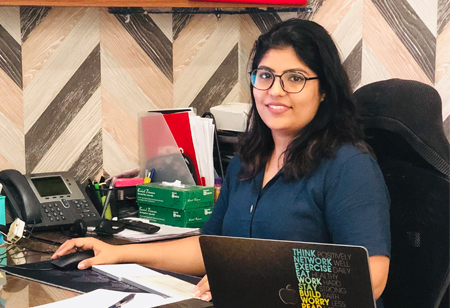
Wesley Hartman, the founder of Automata Practice Development, has been at the forefront of IT innovation since 2005 and has been working in IT for accounting since 2009. While spending 15 years as the Director of Technology at an accounting firm, he pioneered a robotic process automation (RPA) platform in 2014. Starting with an automation that inputs K-1 data from spreadsheets into tax software, he expanded automations to many parts of the firm including, data mining, custom emailing, invoicing and decision-making solutions. Now he focuses on bringing his knowledge and skills as a C-Suite level advisor and strategic engineering of automations to firms.
I have a strong opinion that to understand accounting practices, you need to work in accounting. My background is computer engineering, but I spent 15 years working side-by-side with the staff completing the actual accounting work. It gave me an opportunity to see the pain points that they might not even be aware of. I kept an open mind to what, why and how they were completing their tasks. From there, I identified what were the general pain points that all accountants face. This really helped me build structured automation solutions that could be tailored to cover 75% of the common processes, with the remaining 25% available for customization.
The two most visible trends driving change in accounting today are artificial intelligence and the accounting talent pipeline. I think the less obvious trend is the amount of data that is being generated. The rate of data that's being created needs tools that can help move data into the right place or analyze data to yield meaningful insights. Current artificial intelligence is mostly generative, which translates to data creation, and then the lack of talent means there's no one to manage the data coming in. Together, these trends are really pushing the demand for automation in some form or another.
There are different types of automation, and certain automations are better than others depending on the problem you're trying to solve. Agentic AI automation is difficult to balance because AI in itself is a bit of a black box. You might be able to record all the inputs and outputs to determine where something went wrong, but with AI, you won’t be able to fix the problem. It becomes difficult to always make sure that you end up with consistent results due to the generative nature of AI. Deterministic automations, on the other hand, use technology that has been around for decades, where, when something goes wrong, you can trace it to exactly where there was a data mismatch or an incorrect logic handling. Then a fix can be directly applied to handle the situation. We always push for deterministic automation, but we'll apply agentic AI automation in very narrow cases where AI can excel and there is a built-in human gate to verify the result.
There are two important points for digital transformation and change management. The first is to make sure you have a problem that you're solving. If you don't know what your problem is, and then you try to add technology, whether it's a new application or AI, your launch will fail. A solution looking for a problem always results in wasted time and money. The second is to have a plan for the transformation and process change. That plan should include the staff who are doing the work and who would have the most direct benefit of the automation. Every successful project I have deployed included a detailed understanding of the problem, a plan that was created with the right staff who could make decisions on any adjustments. When I rolled out a new document management system, I spent almost all the time with the staff who were using the old software than with the leadership that made the decision. I made sure their input was heard and integrated into the plan. This gave them a sense of ownership.
The most important qualities to carry into this field are always keep an open mind, stay flexible and be empathetic. Technology and automation are rarely a rigid structure in how a solution should be deployed. Keep agile and be ready to adjust course as things change. You can have a plan, but that plan needs to have some flexibility as new ideas and capabilities are discovered through the process. Think about being in the staff’s shoes to create the most robust solution.


The articles from these contributors are based on their personal expertise and viewpoints, and do not necessarily reflect the opinions of their employers or affiliated organizations.

