THANK YOU FOR SUBSCRIBING


The Quintessential Technology Source for Corporate Financial Professionals


CFO Tech Outlook Weekly Brief
Be first to read the latest tech news, Industry Leader's Insights, and CIO interviews of medium and large enterprises exclusively from CFO Tech Outlook
AiCR is a purpose-built document AI platform developed within MIAC Enterprise to address mortgage lending’s most persistent operational challenges. Built on decades of hands-on experience in loan due diligence, compliance, and data validation, it was designed to solve a real operational problem rather than to capitalize on artificial intelligence hype. What operational bottleneck did AiCR identify in traditional mortgage loan file review workflows? While leading MIAC’s loan due diligence group, Joe Furlong, President and CEO of AiCR saw firsthand how reviewing residential loan files required four to five hours of manual effort per loan. Each file demanded document validation, compliance checks, data extraction, and re-underwriting that was time-consuming and costly. Seeking to reduce man-hours without sacrificing accuracy, he evaluated existing solutions and found them lacking. Many relied on outdated document recognition with low confidence results, AI-branded chat tools with no lending expertise, or offshore human review masked as automation. “We weren’t trying to build an AI product,” says Furlong. “We were trying to eliminate hours of manual work without introducing risk.” That gap led MIAC to build its own platform. What began as an internal efficiency initiative evolved into AiCR, a document intelligence engine designed to understand and extract data from virtually any document, regardless of format, structure, age, or industry.
Accounting Seed, the #1 accounting solution built entirely on Salesforce, is changing the way companies use financial data with a platform built for adaptability, speed and customer success. Natively built on Salesforce, Accounting Seed delivers CRM and accounting in a single platform, offering real-time visibility across sales, finance and operations, from first interaction to final payment. For small and mid-sized businesses (SMB), this eliminates the inefficiencies of juggling disconnected tools and manual processes. The platform also automates key workflows—most notably through its AR and AP Automation features—and delivers deeper operational insights, helping teams allocate resources more effectively. That clarity empowers businesses to do more with less, scale without the usual pains and stay focused on what matters most: growth. “One of our superpowers is just how flexible and adaptable our system is when it comes to the growing and changing needs of SMBs,” says Ryan Sieve, CTO. Unlike traditional accounting systems that are often more rigid in nature, Accounting Seed evolves with its users, adapting seamlessly to changing needs without disrupting operations. Its flexibility goes beyond setup, letting teams tailor workflows, data fields and automation without rebuilding core processes. While most financial systems enforce fixed workflows, Accounting Seed allows teams to roll out new services, adjust billing models or reorganize teams, without manual workarounds or heavy development costs. “Not all of us have unlimited resources,” Sieve adds. “We're helping put time back into their business where they can really focus on strategy, what's going to help them grow in the best way possible and take on new initiatives, new product lines, whatever that might be.” Without Accounting Seed, businesses often stitch together disconnected systems—slowing progress when they need to accelerate. A single client engagement might pass through a CRM, a project tracking platform, a billing application and finally land in accounting software. Each step is siloed, with different customer records and no easy way to connect the dots. Teams lose time reconciling data, chasing payments and bridging systems instead of focusing on growth. For lean SMB teams, these inefficiencies can be growth blockers.


Today’s CFOs are no longer just financial stewards—they’re technologists, strategists, and first responders when disruption strikes. Spreadsheets, manual checks, and disconnected systems once held things together, but those days are long gone. This generation of finance leaders must make split-second decisions with flawless accuracy across sprawling datasets and shifting regulations. As AI rewires the core of how business runs, CFOs face three seismic shifts: their tools are transforming, their teams are evolving and staying competitive means outthinking challenges before they even arise. Enter MindBridge Founded in 2015, MindBridge’s Financial Decision Intelligence continuously analyzes every transaction through the dual lenses of risk and integrity—empowering finance leaders with real-time insights into financial health, surfacing operational inefficiencies, and flagging issues before small errors become strategic failures. Whether consolidating global entities, auditing trillion-dollar operations, or preparing finance for 2030 and beyond, MindBridge is the bridge between the demands of modern finance and the power of modern technology. “Our software allows you to look at everything, all the time, against the controls that determine financial integrity—which was impossible before,” says Stephen DeWitt, CEO.

Sal Cucchiara, CIO & Head of Wealth and Investment Management Technology, Morgan Stanley

Richard Kung, Chief Financial Officer, CTBC Bank Corp. (USA)

Miguel Navarro, Innovator, Patented Inventor, and Seasoned Digital Leader - Head of Applied Emerging Technologies, KeyBank

Arthur Korsun, CFA, Director of Investment Management, Northwestern Mutual

Enzo Tolentino, Head of Audit - Corporate Digital Audit, Banco de Credito BCP
Generative AI enhances analytics and automation, enabling faster insights, predictive intelligence, operational efficiency, and smarter decision-making across organizations.
AI-powered mortgage document processing platforms thrive on automation, reducing risk and enhancing accuracy while helping CFOs streamline compliance and financial operations in lending institutions.
Operationalizing AI Without Increasing Risk
They are handling more documents, tighter controls, and the same headcount. The systems they deploy must increase throughput without increasing exposure. In this edition of CFO Tech Outlook, we focus on how organizations are applying artificial intelligence with discipline, transparency, and governance to strengthen operations while keeping risk firmly in check.
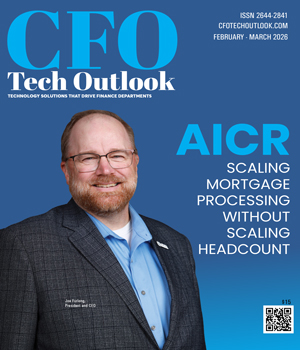
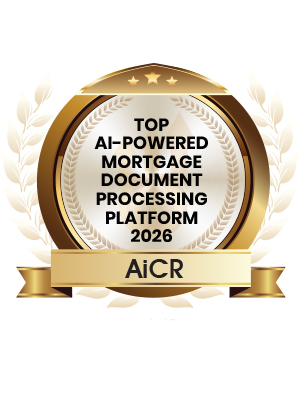
Featured on our cover this issue is AiCR, recognized as the Top AI-Powered Mortgage Document Processing Platform 2026. Developed within MIAC Enterprise, the platform emerged from a straightforward operational need. Reduce hours of manual mortgage review while preserving accuracy and compliance. AiCR applies multi model document intelligence with field level confidence scoring, giving teams visibility into the certainty of every extracted field. Exceptions surface quickly, reviewers intervene where needed, and routine work moves automatically. The result is faster underwriting, higher file throughput, and scalable loan processing without adding headcount or compromising auditability.
Across the broader market, AI is moving closer to decision making authority inside core financial workflows. As that shift accelerates, governance becomes foundational rather than corrective. Finance leaders are prioritizing systems they can explain, validate, and defend under scrutiny. The solutions highlighted throughout this issue reflect that standard, replacing opaque automation with architectures that balance speed with traceability and control.
Leadership perspectives reinforce this approach. Enzo Tolentino, Head of Audit, Corporate Digital Audit at Banco de Crédito BCP, outlines the accountability frameworks and human oversight required as agentic AI expands. Sal Cucchiara, CIO and Head of Wealth and Investment Management Technology at Morgan Stanley [NYSE: MS], underscores data integrity and explainability as prerequisites for trusted systems that augment financial professionals.
Taken together, the stories in this edition point to a decisive shift in how AI is evaluated at the executive level. Competitive advantage is no longer defined by experimentation alone, but by disciplined implementation that balances speed with certainty. We invite readers to engage with these perspectives and explore how responsible AI is shaping the next phase of financial leadership.